
Why Do Some Couples Pick Sad Songs for Their Wedding? (The Bittersweet Tradition)

Couples pick sad or bittersweet songs for their wedding because the songs carry weight — they acknowledge loss, history, family members who aren't there, and the simple fact that getting to this day was not guaranteed. In context, those songs don't actually feel sad; they feel earned.
15% off: Use code LOVE15. Free hanging frame.
Is it bad luck to pick a sad song for your wedding?
No. The "no sad songs at weddings" idea is a relatively modern, Instagram-era expectation. Historically, wedding music has always included laments — Celtic weddings have long included slow airs played for absent family, Jewish weddings include the breaking of the glass to remember sorrow inside joy, and Southern weddings often feature hymns that are structurally mournful but spiritually triumphant. A bittersweet song at a wedding is one of the oldest traditions in the book.
Across more than 100,000 song-lyric canvases sold by AmourPrint, the most-ordered first-dance lyrics include several that technically read as sad on paper — Bless the Broken Road (about long crooked failure before finding the right person), Make You Feel My Love (about being the only one left when everyone else gives up), and At Last (about waiting so long you almost stopped believing). None of those are cheerful pop. All of them work.
What makes a sad wedding song actually work?
The bittersweet songs that succeed at weddings share a structure: they acknowledge something hard, then resolve. They don't end in despair — they end in arrival. That's why they hit. The audience hears the journey and the destination in the same song.
The ones that don't work at weddings are the ones that end in unresolved grief. A song about a relationship ending, or about someone dying without a redemptive turn, will land wrong even if you both love it. Save those for the canvas in the hallway, not the dance floor.
- Bless the Broken Road — every wrong relationship led here. Standard bittersweet wedding anchor.
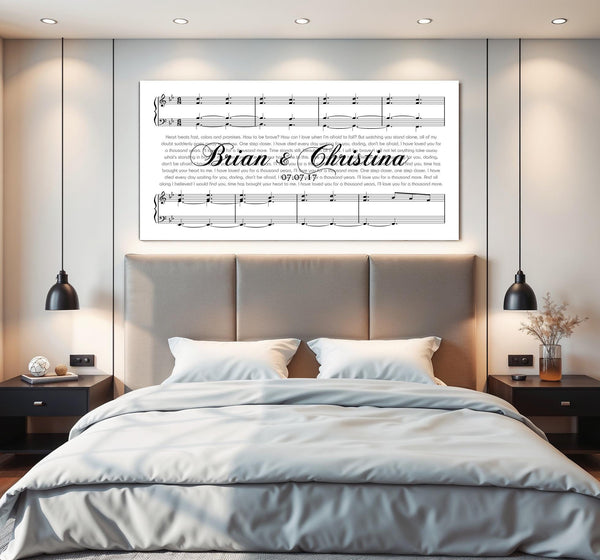
- A Thousand Years — written about Bella and Edward but functionally about anyone waiting for the right person.
- At Last — Etta James, the original "finally arrived" song.
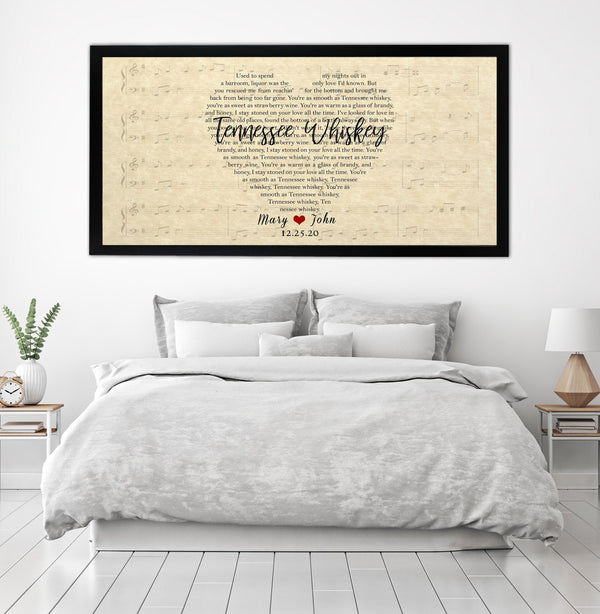
- Tennessee Whiskey — slow, drawling, weathered. About being saved from yourself.
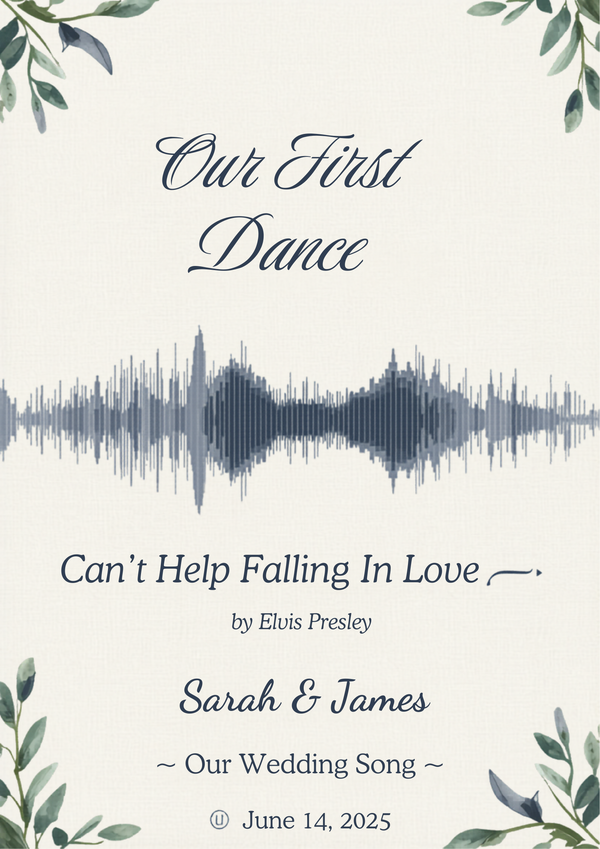
- Can't Help Falling in Love — the only Elvis ballad that sounds wistful and hopeful at the same time.
- Make You Feel My Love — Adele or Dylan version, both work. About loving someone harder than anyone else ever could.
Why are couples choosing songs that honor people who aren't there?
This has accelerated in the last five years. Couples who lost a parent before the wedding, who got engaged during a difficult chapter, or who waited through long-distance years often pick a song that explicitly references the people or seasons that didn't make it to the aisle. It's not sad in a depressing way — it's an act of inclusion.
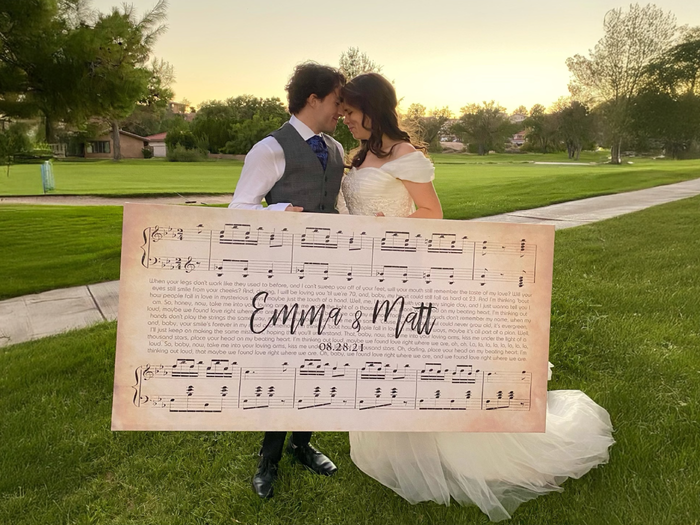
One pattern we see often in AmourPrint's 24-hour preview requests: a song-lyric canvas that goes on the entry-table at the reception, with the lyric printed up top and a smaller line at the bottom that reads something like "for Dad, who would've been so proud." It does two jobs — it sets the song that will play later, and it makes the absent person part of the day.
How do I preserve a bittersweet first-dance song without making it heavy?
Print the lyric on canvas, frame it small, and hang it somewhere domestic — the bedroom, the hallway, the breakfast nook. Not the formal living room where guests will read it. The point of a bittersweet wedding-song canvas is that you live with it, not perform it.
AmourPrint's matte 16x20 canvas with the free hanging frame is the most-ordered size for this. The 24-hour designer preview matters here because bittersweet lyrics need careful spacing — too tight and they feel mournful, too airy and they lose intimacy. Free unlimited revisions are useful for finding the exact letter-spacing that lands.
Are sad songs becoming more popular for first dances?
Yes, slightly. The Knot and similar wedding industry data has shown bittersweet ballads ticking up since 2020 — pandemic-era couples got married through serious context, and music selection reflected that. The trend has held. A wedding song now is allowed to be heavy. Couples are leaning into honesty over picture-perfect.
If you're worried about the song reading as too somber on the day, the fix is in the room more than the song. Soft uplighting, a tight slow-dance circle, and a band that knows to lean into the resolution at the bridge will make Make You Feel My Love feel like the most romantic three minutes of the night.
What customers say
"We picked Bless the Broken Road because both of us had been through bad first marriages before we met. People cried during the dance — but the good kind of cry. The canvas hangs in our hallway now." — M.J., AmourPrint customer
Related
- Custom song lyric canvas
- First dance song canvas ideas
- Hidden message canvas layouts
- Can a song save a marriage?
Turn your bittersweet first dance into a canvas you'll keep forever.
Code LOVE15. Start designing →