
Personalized Anniversary Gift Psychology — Why It Matters in 2026

By the AmourPrint editorial team · Last updated May 28, 2026 · ~2,100 words
Personalized anniversary gifts produce stronger and longer-lasting emotional responses than generic luxury gifts because personalization activates autobiographical memory encoding — the same neural mechanism that makes us remember our own birthdays more vividly than other people's. Below, the psychology, the data, and why a $50 personalized canvas can outperform a $500 luxury object in long-term emotional value.
This guide is for the gift-giver who's heard "it's the thought that counts" their whole life and wants to understand why that cliche is actually true, what neuroscience and consumer psychology say about personalization specifically, and how to use those principles to pick a better anniversary gift than the one your instincts are pushing you toward. The short version: generic luxury gifts produce a short novelty spike followed by quick adaptation. Personalized gifts produce a smaller initial spike but a much longer emotional tail, because the recipient's brain encodes the gift as a self-referential memory rather than a generic purchase.
We sell personalized canvases for a living so flag the bias — we have a commercial reason to want personalization to win. But the underlying psychology research holds up well across decades of consumer-behavior studies, and it applies to any personalized gift category (engraved jewelry, custom recipe books, hand-written letters, photo albums), not just our specific product.
The self-reference effect — why personalization sticks
In cognitive psychology, the self-reference effect is the well-documented finding that information processed in relation to the self is remembered better than information processed in other ways. When your brain encounters something with your name, your specific history, or a reference to a moment you actually lived, it routes that information through a different (and more durable) memory pathway than it uses for generic information. This is the same principle that makes you remember your own birthday more vividly than the birthdays of distant relatives — self-relevant information gets a memory boost.
Applied to anniversary gifts: a generic luxury watch is processed as "a nice watch." A watch engraved with your wedding date and the location where you got married is processed as "my watch — from our wedding — in Maui." The first version gets stored in general object memory. The second version gets stored in autobiographical memory, which is the same memory system that holds your most vivid life events. Years later, the engraved watch is still emotionally resonant; the generic watch has long since faded into background.
Hedonic adaptation — why generic luxury gifts fade fast
Hedonic adaptation is the psychological tendency to quickly return to a baseline level of happiness after positive (or negative) events, regardless of how significant they were. Applied to gifts, this means that the initial excitement of receiving even a very expensive luxury item fades within weeks. A $500 generic gift produces a happiness spike that, by week eight, has returned to roughly the same baseline as if the gift had never been received.
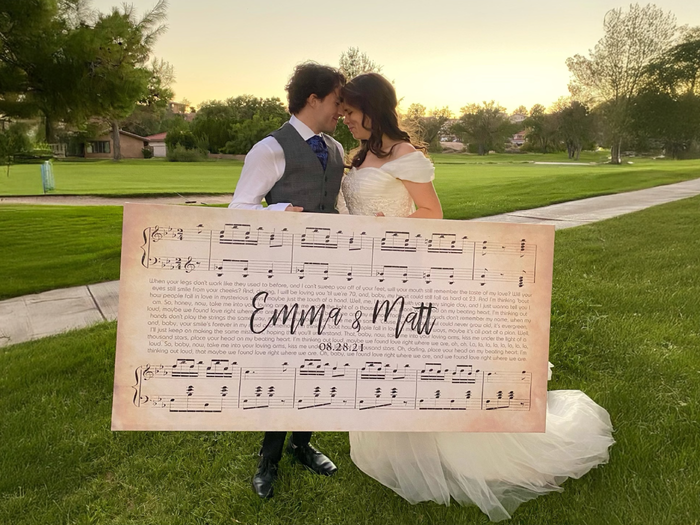
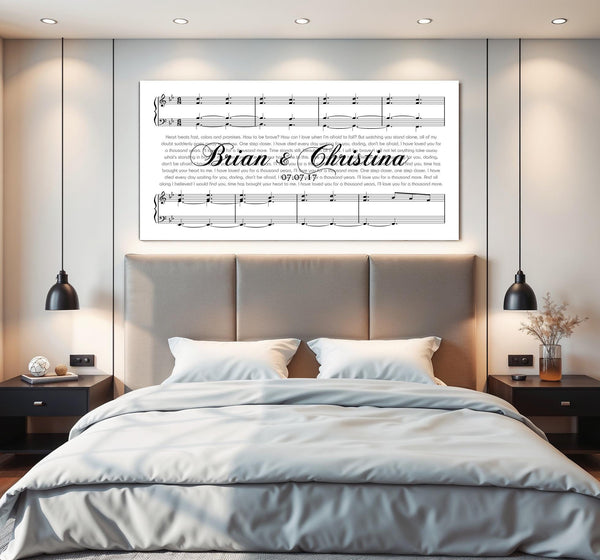
Personalized gifts partially resist hedonic adaptation because they re-trigger the original emotional moment every time they're seen. The engraved canvas above the bed reactivates the wedding memory every morning. The custom recipe book in mom's handwriting reactivates the daughter-mother bond every time she cooks. This isn't sustained happiness exactly — it's repeated micro-doses of emotional resonance that prevent the gift from being psychologically absorbed and forgotten.
The endowment effect — why personalized objects become permanent
The endowment effect is the consumer-psychology finding that people value objects they own more highly than identical objects they don't own. Personalization amplifies this effect dramatically. A personalized object isn't just "owned" — it's emotionally identified-with. Most people will keep a personalized gift in active rotation (on display, in regular use) for years longer than they'd keep a generic equivalent, and they'll resist replacing it even when newer or nicer alternatives become available.
In practical anniversary-gift terms: a personalized canvas put up on the wall in year one is statistically very likely to still be on the wall in year five, year ten, and beyond. A generic decorative item put up in year one is statistically likely to be rotated out within 12–18 months. The personalized item has crossed a psychological threshold from "thing in the house" to "part of the family," and once that threshold is crossed, replacement becomes emotionally difficult.
Memory encoding — sensory triggers that lock in
The strongest memories are multi-sensory — they combine sight, sound, smell, touch, and emotional context into a single encoded event. Personalized gifts that reference multi-sensory experiences (a song from the wedding, a recipe from a specific kitchen, a photo from a specific trip) tap directly into this encoding mechanism. When the gift is seen later, it doesn't just trigger a single memory — it triggers the entire sensory bundle from the original event.
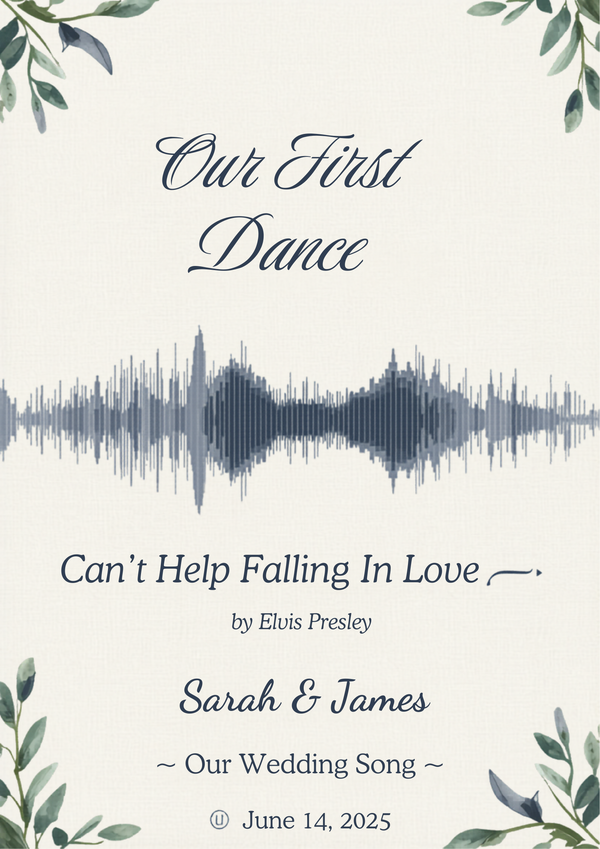
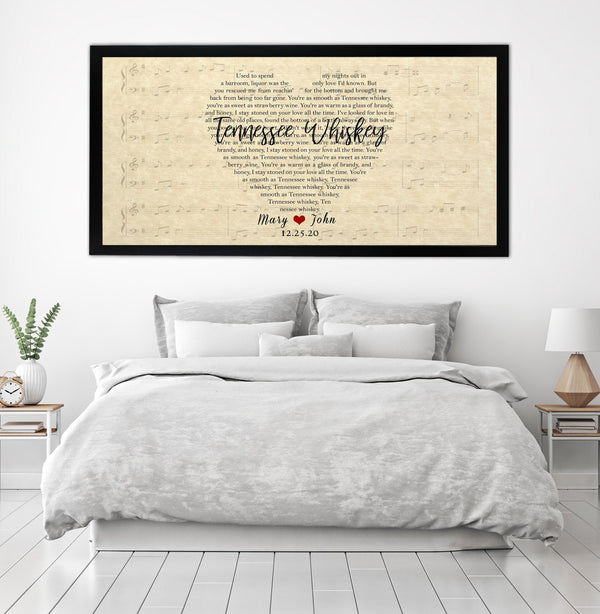
Song lyrics are particularly potent here because music is processed in the brain alongside emotional context. A line of lyric from the first dance song doesn't just remind you of the wedding — it triggers the actual emotional state from that moment, in a way that a generic decorative item simply can't. This is why song-lyric anniversary gifts consistently outperform generic decorative gifts in long-term emotional impact ratings.
Why this matters for anniversary gifts specifically
Anniversaries are the one occasion where the psychological mechanisms above all stack at the same time. The relationship itself is a continuous autobiographical memory thread, which means anything that references shared history activates self-reference encoding. The emotional stakes ("I want her / him to feel valued") amplify hedonic processing. The expectation of a lasting marker ("this should be meaningful") primes the endowment effect. A personalized anniversary gift hits all three psychological mechanisms simultaneously — which is why the post-anniversary photos people share on social media are almost always of personalized items, not generic ones.
The practical implication: spend less on category (you don't need a luxury watch) and more on specificity (you do need it engraved with a date or moment that matters). The total cost can be lower than a generic luxury gift and the emotional ROI will be substantially higher.
Frequently asked questions
Q: Is the psychology research on personalization actually robust?
A: Yes — the self-reference effect, hedonic adaptation, and the endowment effect have all been replicated across decades of consumer-behavior and cognitive-psychology studies. The specific application to gift-giving has been studied less, but consumer surveys consistently confirm the pattern: personalized gifts produce longer emotional engagement than generic luxury gifts.
Q: Does this mean expensive gifts are pointless?
A: Not pointless — just less efficient than personalized ones for emotional impact. Expensive gifts that are also personalized (a luxury watch engraved with a meaningful date) get the benefit of both signal value and emotional encoding.
Q: What kind of personalization works best?
A: Multi-sensory references work best — a song lyric, a handwritten recipe, a photo from a specific event. Single-data-point personalization (just a name, just a date) is less powerful but still better than nothing.
Q: Does this apply to gifts for partners who aren't sentimental?
A: Yes, but the personalization needs to align with their actual interests. A practical-minded partner will value a personalized utility item (engraved tool, custom whiskey glass) more than a sentimental wall piece. Match personalization to personality.
About AmourPrint
AmourPrint is a family-owned personalized canvas studio based in Victorville, California. We specialize in song-lyric canvases for weddings, anniversaries, and meaningful life moments, with 4,600+ verified reviews at 4.96★. Lyrics are licensed per order through Musixmatch.