
Multi-Canvas Gallery Wall for Couples — Design Guide 2026

By the AmourPrint editorial team · Last updated May 28, 2026 · ~2,000 words
The best multi-canvas gallery walls for couples in 2026 follow three rules: choose a consistent visual register across all pieces, anchor the arrangement around one larger "hero" canvas, and combine personalized content (song lyrics, map, dates) with one or two non-personalized accent pieces — not seven of the same kind.
If you have searched "multi-canvas gallery wall couples" you are probably looking at one of two situations. Either you have one personalized canvas already and want to build a wall around it, or you are planning a multi-canvas project from scratch and not sure how to make seven pieces feel like one composition. This guide walks through both cases. We have shipped many multi-piece gallery wall sets to couples over six years and we have seen what holds together visually and what reads as cluttered.
Three principles ground the recommendations below. First, every piece on the wall should pass the "do I want to look at this for ten years" test individually. The gallery format does not redeem mediocre individual pieces. Second, visual consistency across pieces matters more than thematic consistency — a gallery of canvases in matched frames and color palettes can include very different content (song lyrics, map, wedding date, photo) and still read as one wall. Third, white space is part of the composition; cramming the wall full reads as visual noise rather than gallery.
The hero-plus-accents arrangement (most common)
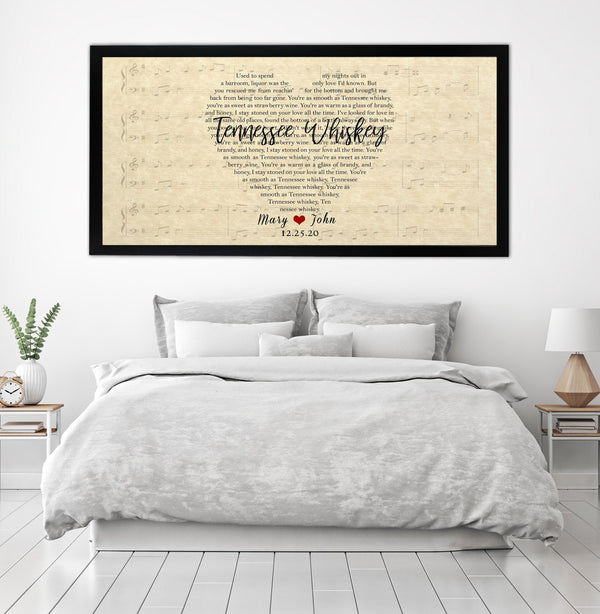
The most common and most successful multi-canvas gallery wall for couples follows the hero-plus-accents model: one larger central canvas (typically 24x36 or 30x40) anchors the composition, with three to six smaller pieces arranged around it. The hero piece is usually the most personally meaningful — the song lyric canvas of the first dance song, or the wedding photo, or the custom map of where the couple met. The accents add layers without competing for attention.
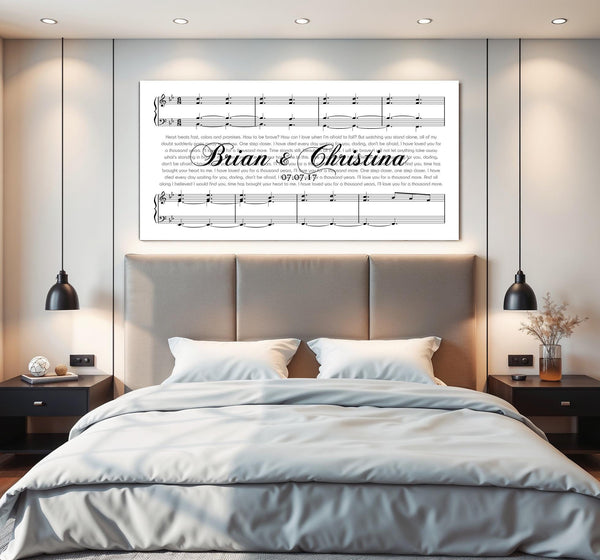
Standard sizing for a hero-plus-accents arrangement: one 24x36 hero piece, two 12x16 accent pieces flanking it, and one or two 8x10 accent pieces filling in. The total wall coverage typically runs 5-7 linear feet wide and 4-5 feet tall, which fits naturally above a sofa, above a bed, or on the long wall of an entryway. The hero piece sits centered and the accents extend outward.
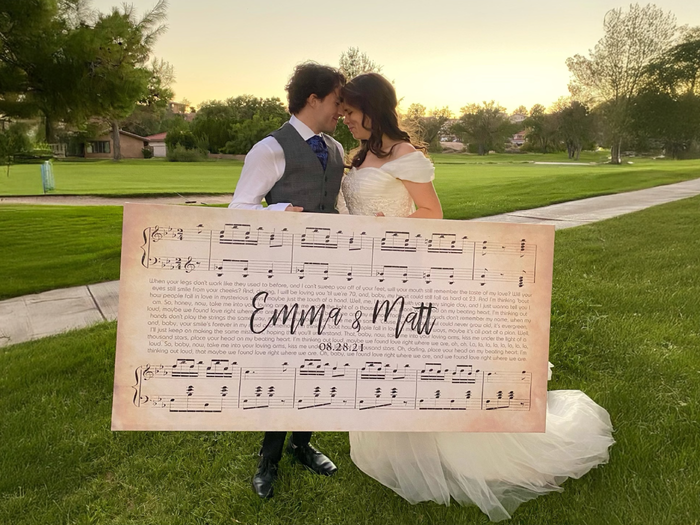
Content combinations that work well in this format: hero = song lyric canvas, accents = wedding date art, custom map, soundwave, and one black-and-white photo. The combination layers the song, the place, the date, the sound, and the image of the couple into one coherent visual story. Alternative: hero = wedding photo, accents = song lyric canvas, custom map, dedication quote, and a smaller skyline of the wedding city.
The matched-triptych arrangement (formal, anniversary-focused)
The triptych — three matched canvases hung in a row — reads as more formal and more deliberate than a hero-plus-accents wall. The format works especially well for anniversary milestones (10th, 25th, 50th) and for couples whose home aesthetic leans contemporary or minimalist. Three pieces of identical size (commonly 16x20, 20x24, or 24x36) in matched frames or matched gallery-wrap finishes, hung with consistent spacing between them, creates a strong horizontal anchor on a long wall.
Content combinations that work well in triptych format: three song lyric canvases (first dance, anniversary song, song from a meaningful trip), three custom maps (the city they met, the city they wed, the city they live now), or three dates (relationship started, wedding date, first child date) typeset in matched typography. The repetition is part of the visual logic — three of the same kind of thing, presented identically, reads as a deliberate series rather than a collection.
What to avoid in triptych format: three pieces of different content types (one song, one map, one photo) will not read as a series. The triptych depends on the visual rhythm of three matched canvases doing the same thing three times. Mixed content disrupts that rhythm.
Spacing, sizing, and wall measurements
The most common multi-canvas gallery wall mistake is poor spacing. The default impulse is to hang pieces too close together, which makes the wall read as cluttered. The general rule: spacing between canvases should be 2-4 inches for smaller pieces (8x10 to 12x16), 3-5 inches for medium pieces (16x20 to 20x24), and 4-6 inches for larger pieces (24x36 and above). Consistent spacing across the whole arrangement matters more than the specific number.
Total wall coverage rule of thumb: the gallery wall should cover 50-75% of the width of the furniture below it (sofa, bed, console table). A sofa 7 feet wide pairs naturally with a gallery wall 4-5 feet wide. A king bed 6 feet wide pairs with a gallery wall 3.5-4.5 feet wide. Going wider than the furniture reads as overscale; going narrower reads as underscale.
Height placement: the center of the gallery wall should sit at approximately eye level for a standing adult, which is typically 57-60 inches from the floor. For arrangements above a sofa or bed, this rule shifts — the bottom edge of the gallery wall typically sits 6-10 inches above the top of the furniture, with the rest of the arrangement extending upward from there.
Frame, edge, and finish consistency
The fastest way to make a multi-canvas gallery wall read as cohesive: match the finish across all pieces. Either all gallery-wrap (canvas wrapped around the stretcher bars with no visible frame), or all framed in identical frames, or all in matched float-frame style. Mixing finishes (some framed, some unframed, some thick edges, some thin) reads as accidental.
For canvas-only gallery walls, our default recommendation is gallery-wrap with 1.5-inch deep stretcher bars across all pieces. The format is contemporary, frame-cost-free, and the depth gives the wall presence without the visual weight of frames. Edge color should be consistent across pieces — either all white wrap, all black wrap, or all image-extending wrap (where the print continues around the edges).
For framed gallery walls, simpler frames typically work better than ornate ones. Black or white floater frames in 1-2 inch profile read as gallery; thick gold or carved frames compete with the content. The frame color should match across all pieces; mixed-frame walls almost always read as cluttered no matter how nice the individual frames are.
Five specific gallery-wall combinations for couples
Five layouts we have shipped repeatedly to couples designing multi-canvas walls:
1. The wedding wall (5 pieces). Hero = 24x36 song lyric canvas of first dance. Accents = 16x20 wedding photo, 12x16 custom map of venue, 12x16 dedication quote, 8x10 wedding date art. Hangs above the bed in the master bedroom.
2. The anniversary triptych (3 pieces). Three matched 20x24 song lyric canvases of first dance, 10th anniversary song, and 25th anniversary song. Hangs in the formal living room.
3. The geography wall (4 pieces). Hero = 24x36 custom map of the city where the couple met. Accents = 16x20 map of wedding venue, 16x20 map of first married home, 12x16 map of current home. Hangs in the entryway or hallway.
4. The dual-portrait gallery (6 pieces). Hero = 30x40 black-and-white photo of the couple. Accents = 16x20 song lyric canvas, 12x16 vow excerpt, 12x16 custom map, 8x10 wedding date, 8x10 anniversary date. Hangs in the main living room.
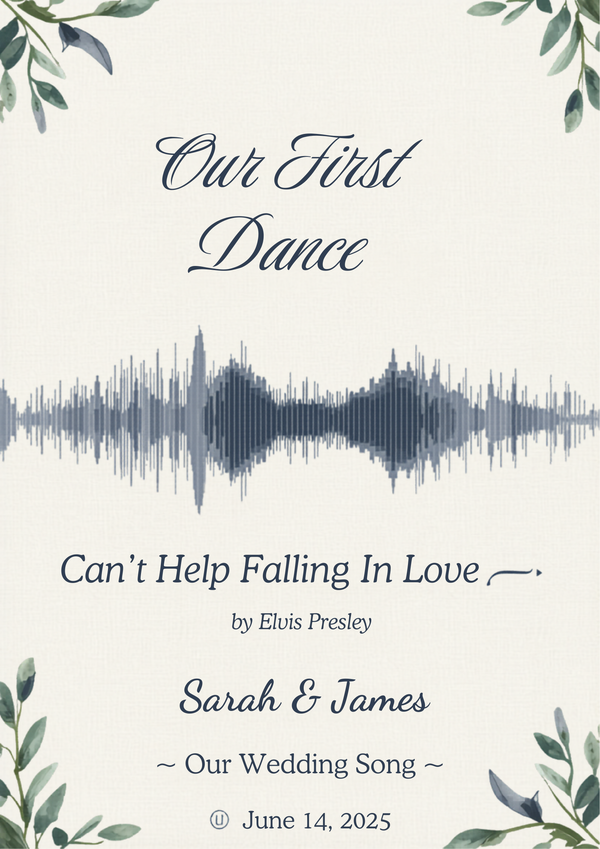
5. The lyric-and-soundwave pair (2 pieces). One 24x36 song lyric canvas of the wedding song, one 24x36 soundwave canvas of the wedding vows audio. Hangs side by side in the bedroom or entryway, identical scale, matched typography.
Frequently asked questions
Q: How many canvases should a gallery wall have?
A: Most successful gallery walls have between 2 and 7 pieces. Beyond 7 the composition gets harder to hold together; below 2 it is not really a gallery, just a hung canvas.
Q: Should I lay out the pieces on the floor before hanging?
A: Yes — always. Lay the arrangement on the floor first, photograph it from above, and adjust until the composition reads right at a glance. Then transfer to the wall using paper templates cut to canvas size.
Q: Can I add to a gallery wall over time?
A: Yes, but plan for it. Leave intentional white space in the original layout where future pieces will fit, and commission future pieces in the same size, finish, and color palette as the originals.
Q: What if my pieces are different sizes already?
A: Use the salon-style approach — mixed sizes hung with intentional asymmetry, all in matched frames or matched gallery-wrap finish. Anchor the arrangement around the largest piece and balance smaller pieces around it.
About AmourPrint
AmourPrint is a family-owned personalized canvas studio based in Victorville, California specializing in song-lyric, custom-map, and personalized canvas pieces. 4,600+ verified reviews at 4.96★. We offer matched-size sets for gallery wall projects with finish and color-palette consistency across all pieces. Lyrics licensed per order through Musixmatch. Read our customer reviews.