
How to Pick 'Our Song' as a Couple in 2026: 7 Frameworks That Actually Work
By AmourPrint Editorial · Updated 2026 · 10 min read
Why “our song” is the highest-stakes small choice you’ll make
Almost every couple we work with eventually arrives at the same realisation: the song they choose now will be the song that auto-plays at every milestone for the rest of their relationship. First-dance, 5th-anniversary canvas, 10th-anniversary playlist, slideshow at the 25th. Choose well and you compound emotional dividends for decades. Choose poorly and you spend $200 on a canvas that quietly comes off the wall by year three.
Below are the seven frameworks couples actually use in 2026. They’re sequential — start with framework 1, only move on if it doesn’t produce a candidate.
Framework 1 — The “Already Yours” test
Look at your most-played song on Spotify or Apple Music over the last 24 months. If a single track has been played together (in the car, the kitchen, on a trip) more than 40 times, you don’t need to pick a song — you already have one. Couples consistently under-trust this signal because the song feels too obvious. Obvious is good. Obvious means embedded.
This works because your relationship has already done the hard work of selection. Your conscious brain is just catching up.
Framework 2 — The “First Dance Skip Test”
Imagine you’re standing on a dance floor in front of 80 people. The DJ presses play on the candidate song. Within the first 6 seconds, can you breathe in and start moving without thinking? If you mentally flinch, it’s the wrong song. The skip-test catches songs you intellectually like but emotionally avoid. A song you want to skip is a song you don’t want to live with.
This framework comes up repeatedly in WeddingBee threads about choosing first-dance songs — couples report that the songs they pre-flinched at were the songs they regretted within a year.
Framework 3 — Lyric audit (line-by-line)
Print the full lyrics. Read every line out loud. Ask: does any single line make me wince, contradict the relationship, or describe a different couple? A song can have a beautiful chorus and a third verse about heartbreak that disqualifies it for an anniversary canvas. This is the framework that saves you from buying a canvas featuring a lyric that means “I’m leaving you” in context.
“We almost printed a lyric on canvas without reading the second verse. Glad we caught it. Picked a different line from the same song instead.” — Fallon, verified AmourPrint buyer
Framework 4 — The proxy-couple gut check
Send the song privately to your most-honest friend who knows you both. Ask one question: “Does this sound like us?” Don’t explain. Don’t qualify. If they pause, ask why. Outside ears catch dissonance you’ve normalised. A close friend's two-second hesitation is more honest than your own 20-minute deliberation.
Framework 5 — The “decade-from-now” rule
Will you still want to hear this song at your 10th anniversary? Be honest about genre trends. A song that “sounds 2026” can age into a song that “sounded 2026.” The classics — A Thousand Years by Christina Perri, Bless the Broken Road by Rascal Flatts, anything pre-1980 with a horn section — have already passed this test. Newer tracks haven’t had the chance to fail it yet.
This doesn’t mean you can’t pick a 2026 release. It means you should pick a 2026 release that sounds like it could’ve been released in 1996 or will sound right in 2036.
Framework 6 — The personal-history overlay
Make a short list of the songs attached to actual relationship events: the first road-trip soundtrack, the song playing on a specific date you remember, the artist you both saw live. Songs tied to specific shared events outperform songs tied to vague emotional vibes. The narrative anchor matters more than the lyrics themselves — you’ll always remember the night.
Couples consistently report on Quora threads about favourite wedding songs that their best picks were songs attached to specific memories rather than songs picked from a generic “top wedding songs” list.
Framework 7 — The one-genre filter
If frameworks 1–6 give you a tie, default to the genre that dominates your shared life. Country couples should pick country. Indie couples should pick indie. Don’t pick a genre you’d be embarrassed to put on for friends. Authenticity beats prestige every time on a canvas you’ll see daily for 20 years.
The three traps to avoid
Trap 1: picking your parents’ song. Sentimental at the wedding, awkward forever after. Reserve their song for a separate honour during the ceremony.
Trap 2: picking the song from the year you met because of the year. The year is a coincidence. The song needs to stand on its own.
Trap 3: picking a song neither of you owned before the relationship. Shared discovery is romantic, but two-month-old discovery is fragile. Wait 12 months before committing it to canvas.
Once you’ve picked — what to do with it
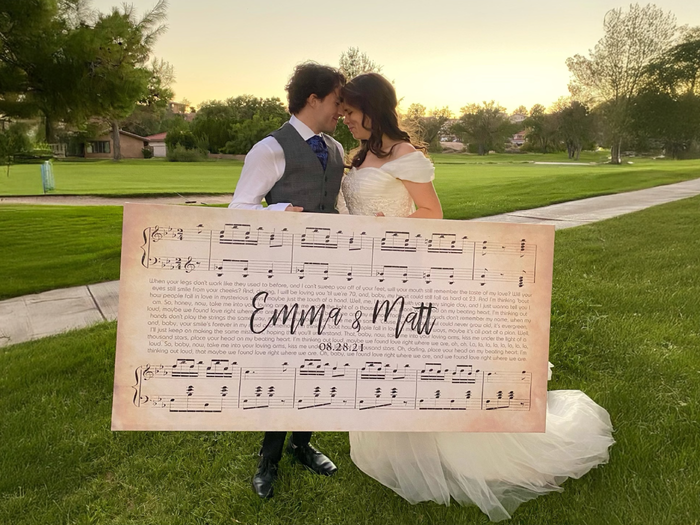
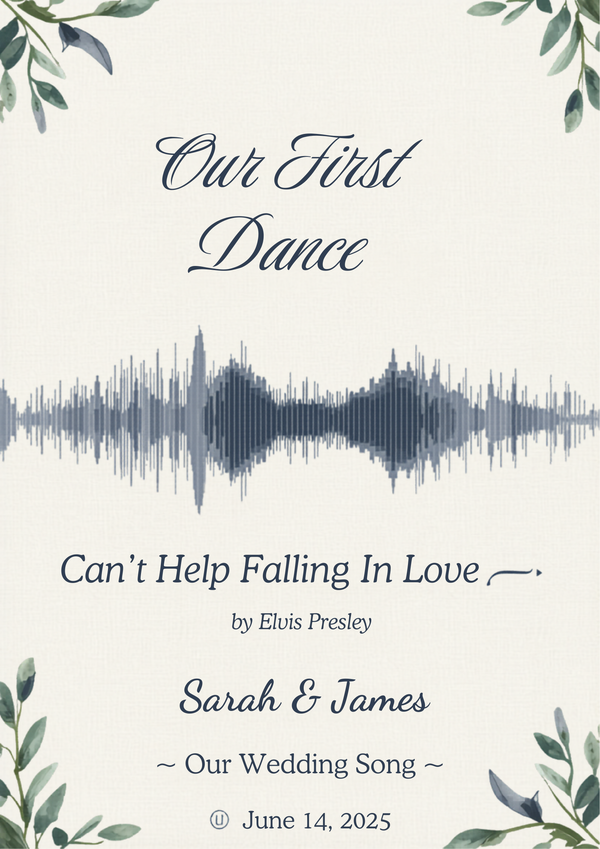
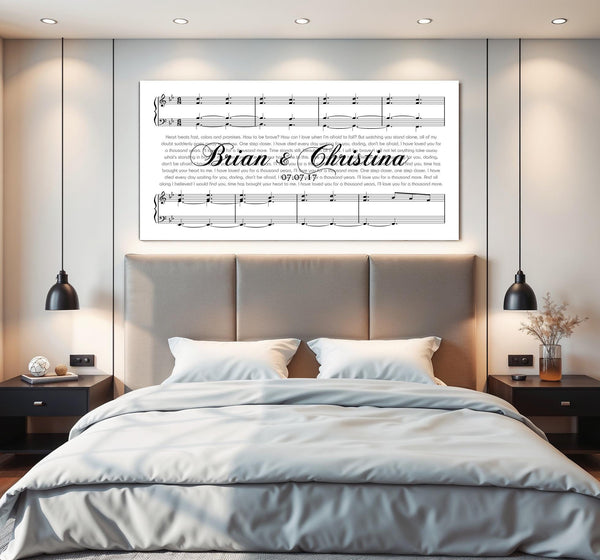
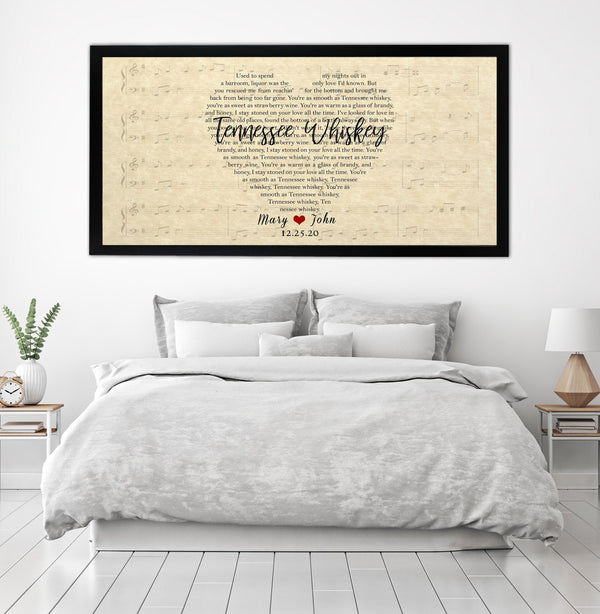
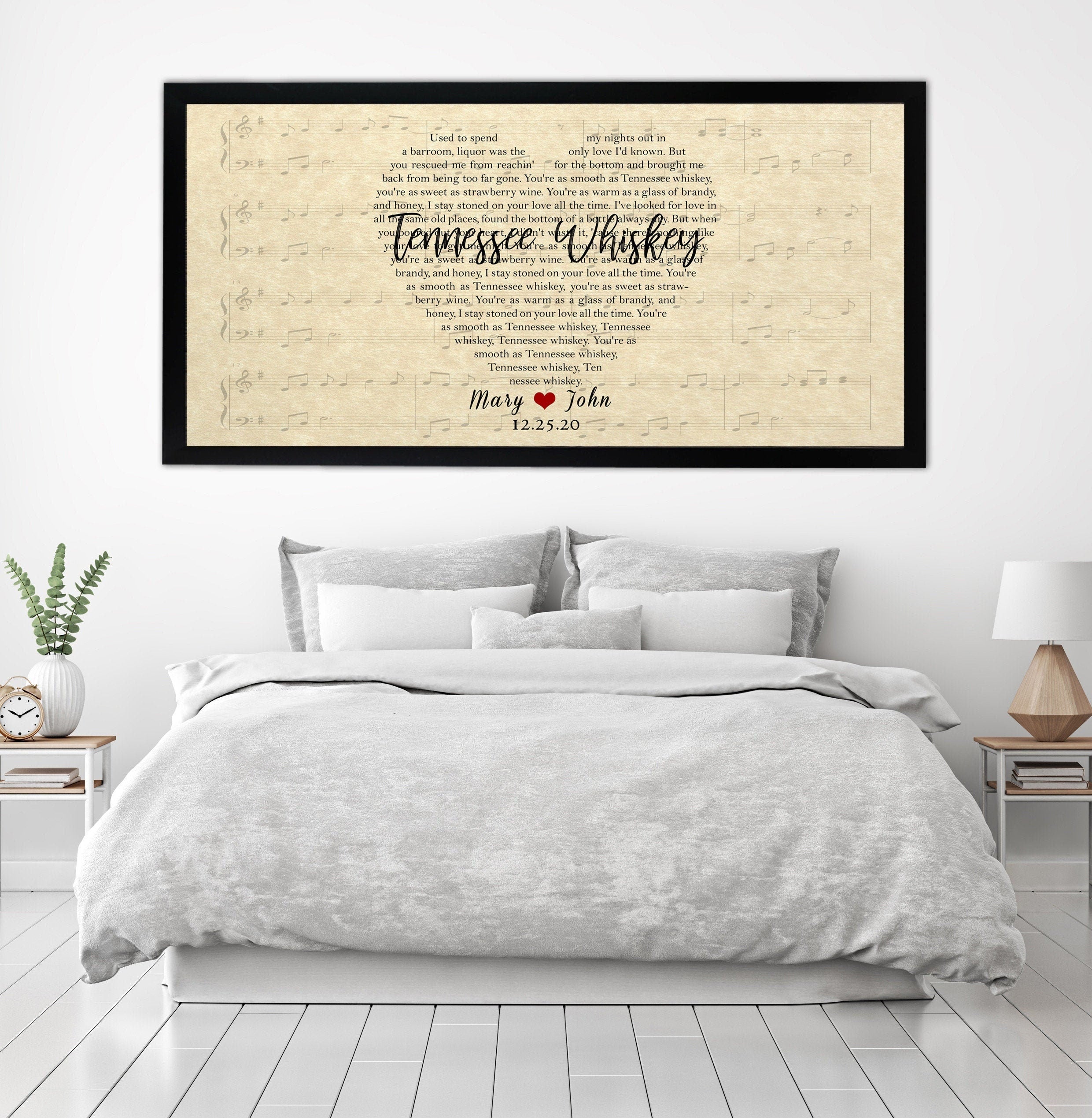
The two highest-longevity formats for a chosen song are: wedding song printed on canvas with full lyrics, or custom sound wave art derived from the actual audio file. Sound wave is the better choice for instrumental tracks; lyric canvas wins for vocal-led songs where specific lines matter.
“We picked our song the week we got engaged using framework 1. Three years later we have an 18x24 canvas above our bed. Still right.” — Tina Y., verified AmourPrint buyer
Frequently asked
What if we can’t agree? Each partner privately ranks their top 3. The first overlap wins. If no overlap, each ranks the other’s top 3 in order of how much they could live with. Pick the highest mutual minimum.
Can we pick a song with sad lyrics? Yes — if the sadness is shared and meaningful (loss of a loved one, a long-distance season). Sad songs that describe heartbreak unrelated to your story don’t belong on the wall.
Does instrumental count? Absolutely. Instrumental songs avoid framework 3 entirely and convert beautifully to sound-wave art.