

Canvas Size Guide: Choosing the Right Dimensions for Any Space
Choosing the wrong canvas size is one of the most common—and most avoidable—mistakes when purchasing wall art. A piece that's too small disappears on the wall, while oversized art overwhelms the space. This comprehensive canvas size guide helps you select wall art dimensions that look intentionally chosen and professionally scaled for any room.
Understanding the Wall Space Formula
Professional interior designers use a simple rule: wall art should occupy 60-75% of the available wall space above furniture or 2/3 to 3/4 of a blank wall section. This proportion creates visual balance without overwhelming or underwhelming the space.
Measuring Your Space Before selecting wall art dimensions, measure the width of the furniture piece below (sofa, bed, console table) or the wall section you're filling. Multiply this measurement by 0.66 to 0.75 to determine your ideal canvas width range.
Example: For a 72-inch sofa, multiply 72 × 0.66 = 48 inches minimum, and 72 × 0.75 = 54 inches maximum. This means canvas widths between 48-54 inches will look properly scaled.
Canvas Size Guide by Room
Different spaces call for different wall art dimensions. Understanding these standards helps you choose canvas sizes that feel right instinctively.
Living Rooms Living rooms accommodate larger statement pieces due to viewing distance and wall space availability.
- Above sofas: 40×30 to 60×40 inches (or multiple smaller pieces totaling this range)
- Focal walls: 48×36 to 60×40 inches for maximum impact
- Side walls: 24×36 to 30×40 inches
Bedrooms Bedroom art creates intimate atmospheres, with sizes depending on bed dimensions.
- Above queen beds: 40×30 to 48×36 inches
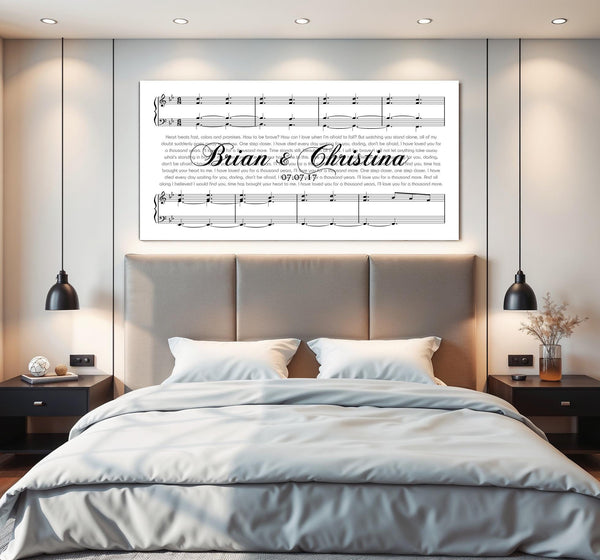
- Above king beds: 48×36 to 60×40 inches
- Side walls: 20×24 to 24×30 inches
Dining Rooms Dining room canvases complement table proportions without competing with table settings.
- Above sideboards/buffets: 36×24 to 48×36 inches
- Main walls: 40×30 to 48×36 inches
Entryways and Hallways Narrower spaces require vertical or moderately sized pieces.
- Console table walls: 24×30 to 30×40 inches (vertical orientation often works best)
- Hallway galleries: 16×20 to 24×30 inches in series
Bathrooms and Powder Rooms Smaller spaces call for appropriately scaled pieces.
- Above vanities: 16×20 to 24×30 inches
- Accent walls: 20×24 to 24×30 inches
Home Offices Office art should inspire without distracting, with sizes suited to desk placement.
- Above desks: 24×30 to 36×24 inches
- Behind seating areas: 30×40 to 40×30 inches
How to Choose Canvas Size: The Viewing Distance Rule
Your canvas size should relate directly to typical viewing distance—the farther away viewers stand, the larger your canvas should be.
Close Viewing (3-5 feet) Bedrooms, bathrooms, home offices: 16×20 to 24×30 inches
Medium Viewing (6-8 feet) Dining rooms, smaller living rooms: 24×30 to 36×48 inches
Far Viewing (8-12 feet) Large living rooms, open concepts: 40×30 to 60×40 inches or larger
Common Canvas Sizes and Their Best Uses
Understanding standard wall art dimensions helps you make informed decisions quickly.
Small (11×14 to 16×20 inches) Perfect for gallery walls, smaller bathrooms, shelving displays, or intimate bedroom corners. These sizes work well in groups but may disappear solo on large walls.
Medium (20×24 to 24×36 inches) Versatile sizes suitable for most rooms. Ideal above nightstands, in hallways, home offices, or as part of larger groupings.
Large (30×40 to 36×48 inches) Statement pieces for living rooms, master bedrooms, or dining rooms. These wall art dimensions create focal points and command attention.
Extra Large (40×60 inches and up) Dramatic options for spacious rooms with high ceilings or expansive walls. Best for open-concept spaces or above king beds.
Gallery Wall Considerations
Gallery walls require different thinking about how to choose canvas size effectively.
Mixed Size Approach Combine 3-7 pieces in varying sizes (8×10, 11×14, 16×20) for visual interest. The total grouping should follow the 60-75% rule based on the entire wall section.
Consistent Size Method Use identical sizes (such as six 16×20-inch canvases) for clean, modern aesthetic. This approach works beautifully in contemporary spaces.
Spacing Guidelines Maintain 2-4 inches between canvases in gallery arrangements. Consistent spacing creates cohesion even with varied sizes.
Avoiding Costly Sizing Mistakes
These common errors lead to returns and disappointment:
Too Small Syndrome The most frequent mistake. When uncertain, size up rather than down. Slightly oversized art can work; undersized art rarely does.
Ignoring Furniture Proportions Canvas width should relate to furniture below. A 20-inch canvas above a 90-inch sofa looks lost, regardless of wall space.
Forgetting Ceiling Height High ceilings (10+ feet) require larger or vertically oriented pieces to fill space appropriately. Standard 8-foot ceilings accommodate medium sizes comfortably.
Overlooking Orientation Horizontal (landscape) canvases suit wide spaces above sofas. Vertical (portrait) canvases work better in narrow spaces or above console tables.
Using Visualization Tools
Before committing to wall art dimensions, visualize your choice. At https://amourprint.com, you can preview how different canvas sizes will look in your space using room visualization tools. This critical step prevents sizing regret and reduces returns.
DIY Visualization Cut paper or cardboard to your intended dimensions and tape it on the wall. Live with it for a day. If it feels right from all angles and distances, you've found your size.
Special Consideration: Multi-Panel Art
Split canvas designs (diptychs, triptychs) require special spacing considerations.
Total Width Calculation When calculating the 60-75% rule, measure all panels plus the gaps between them. For a three-panel piece with 2-inch gaps: (20" + 20" + 20") + (2" + 2") = 64 inches total.
Gap Spacing Maintain 1.5-3 inches between panels. Wider gaps (3-4 inches) work for larger pieces in spacious rooms.
Making Your Final Decision
When choosing wall art dimensions at https://amourprint.com, consider:
- Measure twice, order once: Verify wall space and furniture dimensions
- Account for viewing distance: Farther viewing requires larger sizes
- Follow the 60-75% rule: Proper proportions look intentional
- Consider room function: Formal spaces can handle larger, bolder pieces
- Use visualization tools: Preview before purchasing
- When in doubt, size up: Slightly larger beats too small
Confidence in Your Choice
Understanding this canvas size guide empowers you to select wall art dimensions confidently. By following these professional standards for how to choose canvas size, you ensure your personalized artwork looks intentionally scaled and beautifully proportioned.
Visit https://amourprint.com to explore canvas options in all sizes, use visualization tools to preview your selection, and create artwork that perfectly fits your space. The right size transforms good art into great design—making the decision worth careful consideration.